mistakes to avoid
Seven Scoring Errors That Wreck Weekly League Standings
Most standings disputes trace back to a handful of repeatable entry errors, not to cheating. These are the seven that show up most often on a league sheet, and the fix for each one.
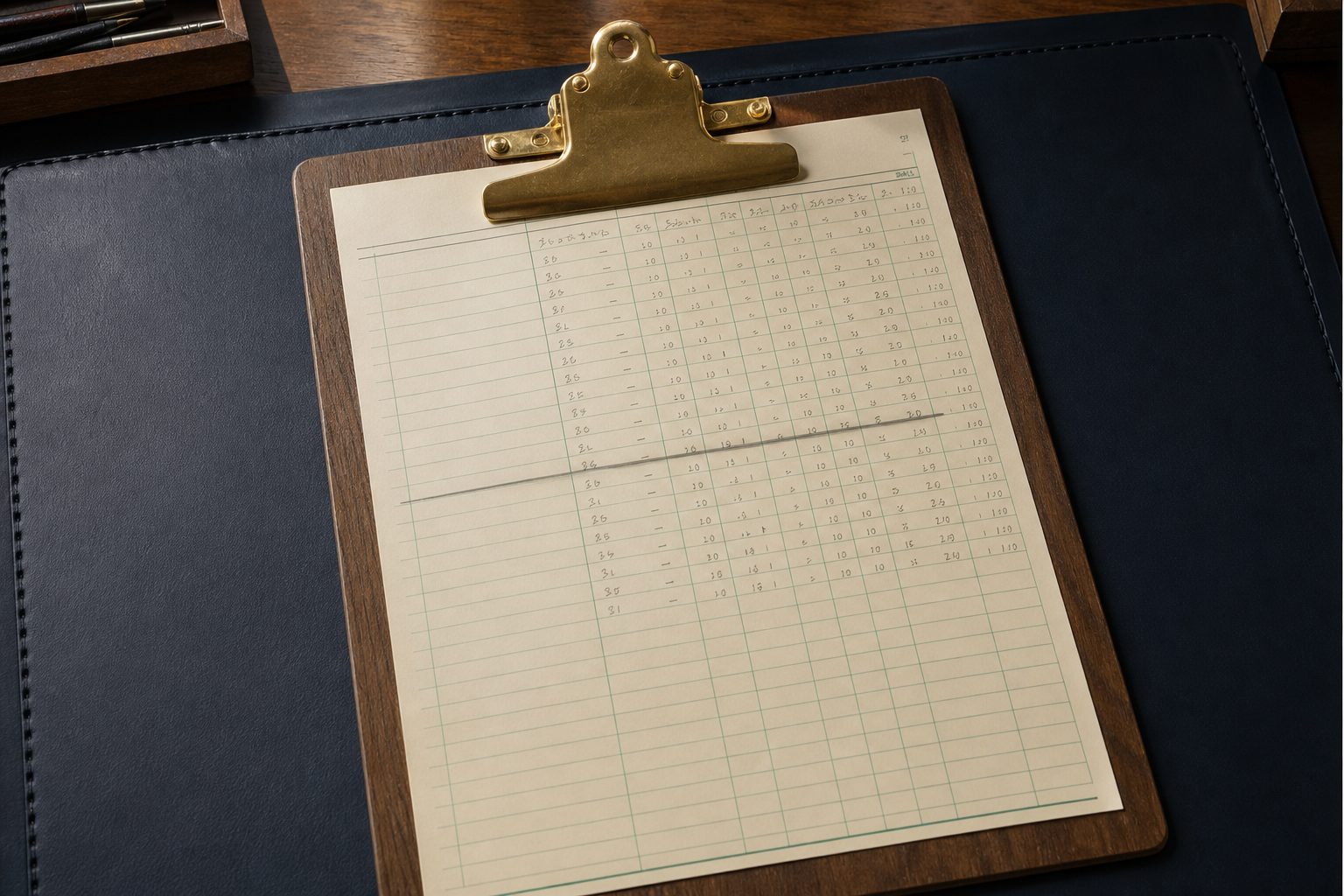
Recording gross strokes on a sheet that expects net
Every league organizer has seen it: a player turns in a card with raw, unadjusted scores, but the league spreadsheet expects net scores already reduced by handicap. This confusion often starts with new players or subs but creeps into full-time rosters too. The result is that a high-handicapper appears to beat the field by a wide margin, or a strong player seems to underperform.
The fix is a clear, written process for what goes on the card. Some leagues want gross, and handle all handicap math centrally. Others want net, and trust players to do the subtraction. Publish this policy at the start of the season, and stick to it. If scores are entered digitally after the round, the entry form should only accept one or the other, never both. Spot checks during the first few weeks catch most misunderstandings before they snowball into a standings mess.
Keep reading: League Prize Money: Amateur Status, Skins Pots and 1099 Limits
Playing a different set of tees without applying the course rating adjustment
It is not unusual for players to want to move forward or back a set of tees, especially as the season wears on or if the weather changes. This can liven up competition, but skipping the course rating adjustment creates a quiet skew in the standings. Tees with lower course and slope ratings make the course play easier. A player's net score, without the adjustment, will look artificially low.
Course rating adjustments are simple in theory. The USGA formula says: subtract the rating of the tees played from the rating of the league's base tees, multiply by 1.13 (if using slope), and add or subtract that number to the player's handicap. In practice, many shop computers and paper sheets do not guide anyone through this math. The onus is on the scorer to ask which tees were used and make the adjustment. The best defense is to set a league rule: either all players use the same tees, or players must declare tee changes before the round.
Some municipal courses now print multiple tee ratings on the same card. If yours does, highlight the number to use for the league, and train your scorers on when and how to apply it. A few minutes of attention here prevents a season of grumbling over "sandbagging" or unfair wins.
Using the wrong handicap allowance for the format that week
Handicap allowances vary by format. Individual stroke play, best ball, scramble, and match play each use a different percentage of a player's index. One week might be full handicap, the next week 80 percent, and the week after that a completely different adjustment. Entering full handicaps in a two-person scramble, when the rules call for half, can shift the results drastically.
The confusion usually arises from default settings in an old spreadsheet or a misunderstanding of the league's calendar. If the allowance changes week to week, post the percentage and a sample calculation in the pro shop or on the league site. Remind captains before each round, especially if the format is rare or new to the group. The best-run leagues keep a "cheat sheet" at the scorer's table with a row for each format, the correct allowance, and a practical example.
Some digital league tools let you set the format each week and apply the allowance automatically. But even with software, check the calculation after the first round of any new format. Errors here are hardest to spot until the complaints start rolling in.
Keep reading: Inside a 20 Week Thursday Night League at a Municipal Course
Points systems that quietly reward players who did not show up
Standings fights often begin when an absent player or team racks up points for a week they missed. Some points systems award participation points or minimums by default, assuming every slot is filled and all rounds are played. If absent players receive the same base points as those who show up, the system rewards no-shows and can even encourage skipping a week.
In most leagues, a "ghost" score or a zero-point rule keeps things fair. If a player knows they will miss a week, the league might let them play ahead or use an average of prior rounds. But these should be clear and documented. The biggest trouble comes when the points system automatically fills in blanks, or when a scorer is not sure whether to enter zero or leave a cell empty. Both choices have big effects on season totals, often not discovered until the awards dinner.
To avoid this, review your points table before the season starts. Make sure there is a policy for absences, and that it matches what your scoring program does. Test with a fake week and see if no-shows get what they should. If you use paper, double-check that everyone agrees on what counts as a played round versus a missed one.
Substitutes scored on the absent member's handicap instead of their own
Subs are a fixture in every league. Life gets in the way, and players miss a week. But a common shortcut is to score the sub's round using the absent member's handicap. This can swing results wildly. A low-handicap sub playing on a higher handicap will crush the field, while a high-handicap sub playing on a lower number is left with no chance.
The right way is simple: score the sub on their own current handicap. If the sub is brand new, most leagues assign a handicap after three rounds, or use a temporary index based on their first score. If a sub does not have a record at your course, use their GHIN or an honest estimate, but be conservative. Document these policies at the start of the season, and track subs in the same way you track regular members. If you use a digital tool, create a sub roster and tie each round to the person who actually played it, not just the lineup slot.
Do not let convenience trump fairness. A few minutes to look up a sub's actual index keeps the standings honest and heads off arguments later.
See how BackNineLive handles this for golf
Ties left unresolved because no tiebreaker was published before week one
Leagues with regular weekly play will end up with tied points, whether in a single week or at season's end. If the tiebreaker is not set before the first round, any decision will look suspicious. Most leagues use a method like lowest net on the hardest hole, or a scorecard playoff starting from the number one handicap hole and working down. Others use head-to-head results or most wins.
The trouble comes when a tie is discovered and there is no written policy. The organizer is left to pick a tiebreaker after the fact. This can create hard feelings, especially if prizes or playoff spots are at stake. It also leads to inconsistent calls from year to year, and members who feel like the rules change on the fly.
Set your tiebreakers in writing before the first ball is struck. Post them where everyone can see. If you use software, enter the tiebreaker rules so results are calculated consistently. If you use paper, keep the tiebreaker method stapled to the master standings sheet. Consistency is more important than the specific rule; the key is that everyone knows what will happen in advance.
Rain shortened nights counted as a full week in the season total
Golf is at the mercy of the weather. Some weeks get rained out after just a few holes. The mistake is counting these shortened rounds as a full week in the standings. This inflates scores, distorts averages, and can even affect who qualifies for playoffs.
Most leagues set a minimum number of holes that must be completed for a round to be official. If the weather cuts play short, and the minimum is not met, the week should not count for points or averages. Entering a partial round as a full week creates confusion, especially when calculating handicaps. Some shop systems default to "played" if any card is entered, so double-check what actually counts in the league stats.
When in doubt, communicate quickly with all captains and post a decision as soon as the rainout is clear. If a partial round must be scored, clearly label it as unofficial or as a separate entry. Over a full season, consistency here matters as much as in any other rule. Rain will happen, but it should not tip the standings unfairly.
All these pitfalls share a theme: avoidable errors in scorekeeping shake trust in the league and create hours of extra work. The more manually the league is run, the more chances there are for someone to miss a rule or misread a sheet. That is where automated tools for league scorecard entry, handicap calculation, flight standings, and weekly results publishing prove their worth. They do not just save time, they reduce the errors that cause the biggest fights.