field report
League Night at the Counter: The Hour Before a Shotgun Start
Cart staging, check in, the starter's script and the moment the horn goes. A close look at how a municipal pro shop runs the sixty minutes that decide whether league night stays on schedule.
Sixty minutes out: cart staging, battery checks and the range basket rush
In most municipal pro shops, the hour before league night is the busiest stretch of the entire week. Cart staging starts as soon as the maintenance crew clears the last morning group. The cart barn team lines up rows, facing outward for easy loading. Each cart's charge level gets a quick check, nobody wants a dead battery on the back nine. A couple of spares are kept ready at the end of the row, just in case.
Range balls become a hot commodity. Early birds grab baskets as soon as the pro shop unlocks the door, and staff run a steady loop refilling from the ball machine. On league night, the range can see more than double its weekday traffic. Some courses use colored baskets to separate league players from public guests, but it's rarely a perfect system. The goal is to keep the warmup area clear and get everyone to their carts before the horn.
Meanwhile, the pro shop staff start their own checklist, opening drawers, switching the phone to the after-hours message, and pulling the tee sheet. Most leagues run with the same roster each week, but there's always a player or two who calls in with a last-minute question about their start hole or a cart request. The phone doesn't stop ringing until about fifteen minutes before the start.
Keep reading: How to Post Nine Hole League Scores That GHIN Will Accept
Check in without a bottleneck: dues, substitutes and the sign up sheet
Check-in is a pressure point. Most leagues require a weekly fee for entry, which covers prizes, skins, or a season-ending dinner. The cash box is counted twice before the first player signs in. Many leagues have moved to electronic payment, but in most pro shops, cash and checks are still common. Staff keep a running tally as players pay dues, careful to note anyone who is still short.
Substitutes are part of league life. Some leagues have an official sub list taped to the counter, others just scribble names on the back of the tee sheet. When a regular can't make it, the pro shop checks for an approved sub and updates the pairing. This usually means a staff member juggling the phone, the sign up sheet, and a roster spreadsheet, often all at once.
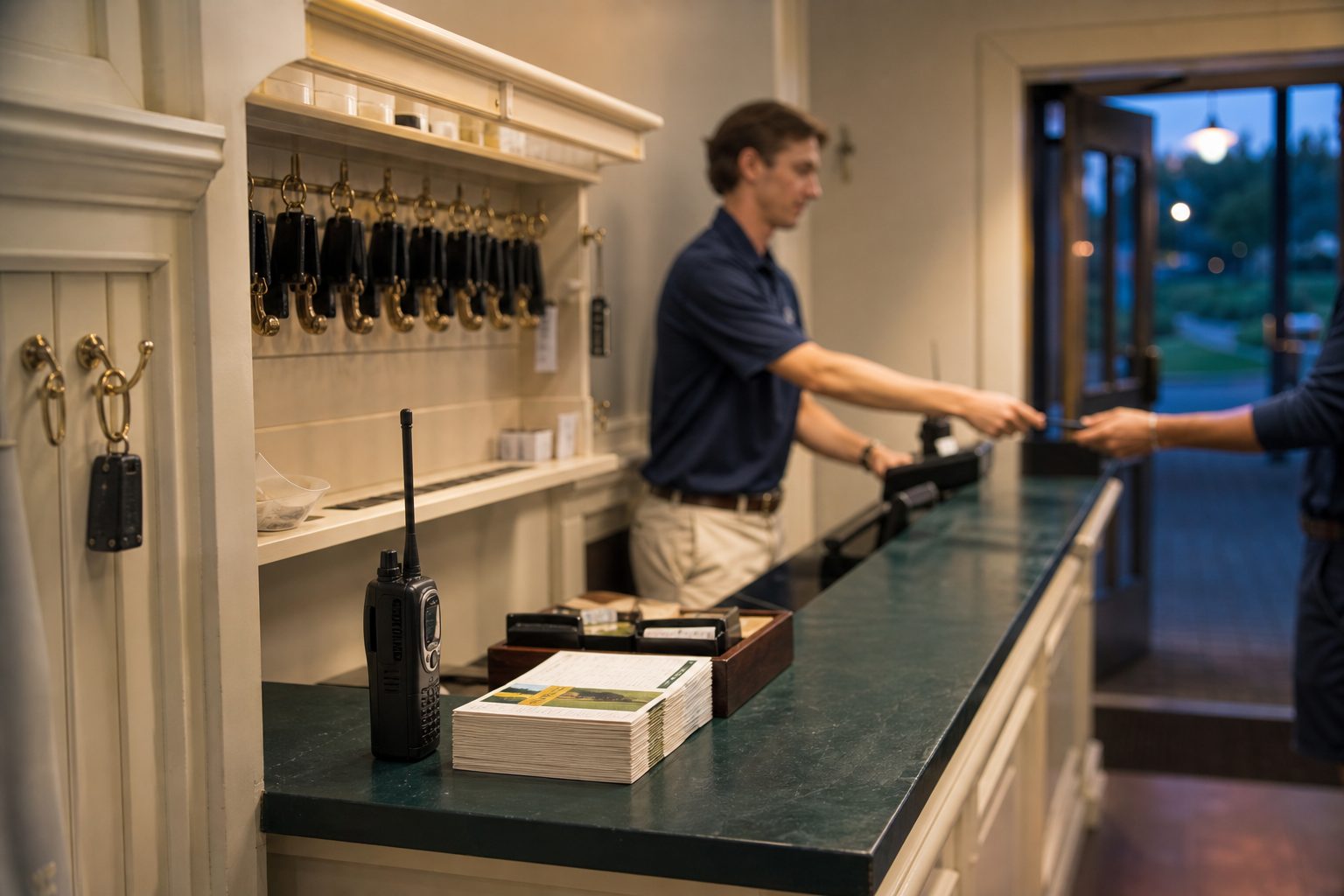
The sign up sheet is the first stop for every player. Most shops keep it at the entrance, with a staff member nearby to answer questions about tee assignments or payment. Each player checks off their name, notes their cart number, and picks up a scorecard. If the league uses optional games, closest to the pin, long drive, these are handled here as well. Staff hand out colored markers or tokens so players remember to record the results.
The goal is to prevent a line. If check in takes more than a minute per group, the start will be late. Some leagues stagger arrival times by handicap or flight, but in most shops, everyone piles in at once. Staff learn to recognize the regulars who need extra help and keep an eye on the crowd for anyone searching for their name or assignment.
The starter's script and how pairings get corrected in the last ten minutes
Ten minutes before the horn, the starter gathers the crowd near the first tee or the main cart area. The script is familiar but crucial. Start with a welcome, a reminder of the league's local rules, pace of play expectations, and any course conditions, wet greens, temporary tees, or cart path restrictions. If the course is using "lift, clean, and place," that's called out clearly.
Pairings are posted on a board or read aloud. Last-minute player swaps are common. Someone always arrives late, or a sub realizes they're in the wrong group. The starter and pro shop manager handle corrections on the fly, sometimes rerouting a foursome to a different starting hole or shuffling carts between flights.
Flight assignments and handicaps
For leagues with flights by handicap, the starter double checks the list just before the horn. If a regular's handicap changed, or a sub is in a new flight, the staff update the pairing and inform the group. Most players know their own number, but a mix-up can slow things down. The staff keep extra printed lists for reference.
Once the groups are set, the starter reads out reminders: who marks scores, where to turn in cards, and which holes have side games. The crowd gets quiet. Staff do a quick headcount, scanning for any open carts or missing faces. The final five minutes are about moving the mass from the range, through the sign up, and onto the course.
Keep reading: GHIN Index vs. In House Average: Picking a League Handicap Method
Where scorecards live between the horn and the standings post
When the horn sounds, the focus shifts. Each group takes a scorecard from the starter or the pro shop counter. The cards have pre-printed player names when possible, but handwritten rosters are common for late subs. At most courses, the player with the lowest handicap keeps the card, but each group picks their own method.
The cards travel with the group from tee to green, usually tucked into the cart's dash or a player's back pocket. If the weather turns, some cards get ruined, so staff keep extras in the beverage cart and at the halfway house. In many leagues, a second player keeps a backup card for verification at the end of the round.
Once the round is over, cards return to the pro shop. Some leagues require the scorer to sign, others just need a clear total for each player. Cards pile up at the counter while the last few groups finish. Staff check for legibility, missing holes, or obvious errors. If a card is missing, the pro shop calls the group by radio or sends a cart out to retrieve it.
Scorecard verification
Verification is quick but important. Staff check the math on net and gross scores. If there's a question about strokes or a disputed ruling, they flag it for the league committee. Most disputes are settled on the spot, but occasionally a group needs to be called back before the standings are posted.
The one radio call that resets a shotgun when a group is missing
A shotgun start should send every group off at once, but in practice, one or two groups always run late. Sometimes it's a lost player looking for their cart, other times a sub who parked in the wrong lot. The pro shop monitors group locations with a clipboard and a handheld radio.
When a group is missing at a starting tee, the starter radios the shop: "Group missing at 7A." Staff scan the sign up sheet and physically check the cart row for unclaimed keys. If the group is still inside, a staff member hustles them out. If the group can't be found, the starter may need to reshuffle the pairings or delay the horn for that hole by a few minutes.
This radio call is the pivot point. Delay one group, and the entire league can fall behind. If the course has daylight limits or a second event scheduled, the starter has to make a quick decision: hold the start for the missing players, or send the rest and let the late group join in when ready. Most shops keep a couple of single carts staged near the pro shop, just for last-minute scrambles.
Once all groups are accounted for, the starter calls the all clear. The horn goes, and the first tee rushes out. The radio stays on for the entire round, ready for lost balls, weather alerts, or scorecard questions.
See how BackNineLive handles this for golf
After the horn: entering scores while the last group is still walking in
As groups begin finishing, the pro shop staff shift to data entry. Each scorecard is checked for completion and then entered into the league's record system. In the past, this meant tallying by hand or using a spreadsheet, but more shops now use dedicated league software.
While the last group is still out on the course, the first cards are already being processed. Staff double check the math and apply the league's net score calculation, which usually involves subtracting each player's handicap from their gross score. Flight winners and side game results are identified and marked for later announcements.
Weekly standings and handicaps
Once all cards are in, the staff update the weekly standings. In leagues with fluctuating handicaps, the night's scores are used to recalculate for the next week. Many leagues require a minimum number of rounds before a new player is assigned a handicap. Staff make note of any players who qualify this week and update the roster accordingly.
The standings are posted on a bulletin board or sent out by email. For leagues that publish results online, the pro shop uploads scores and handicaps through the league website or management tool. Some leagues hold a short award ceremony for the night's top scores and side game winners, usually as players gather for post-round drinks.
Players with questions about their scores, flight assignments, or handicaps often crowd the counter during this time. Staff keep the original scorecards on hand for review, and the process repeats: verify, clarify, update.
What the closing shift hands the next league night
Once the last group has left and the parking lot is quiet, the closing shift gets to work. The cash drawer is counted, the sign up sheet is filed, and any unresolved issues are noted for the next week's staff, missing payments, disputed scores, or player absences. The starter's clipboard, with the latest pairings and flight assignments, is left in the pro shop office.
Any changes to the roster, new substitute approvals, or updates to handicaps are recorded in the league's tracking tool. If the league runs on software, closing staff ensure the latest results are entered and visible for the next set of organizers. Notes about weather, course conditions, or special events are added to the weekly log.
The goal is to make the handoff seamless for the next league night. Returning staff need to know exactly where the league left off: who's paid, who's subbing, and how handicaps have changed. A reliable system for tracking scorecards, dues, and standings keeps operations running smoothly, even as rosters shift week to week.
League organizers who use tools designed for scorecard entry, automatic handicap updates, and quick standings publication find that league night runs more efficiently, from the first cart staged to the last score posted.